

What the IRS Actually Checks in an Audit — and the Three Things They Almost Always Want
Most audits arrive by mail and focus on one or two line items. Understanding what the IRS actually reviews—and what documentation they expect—removes the mystery and gives you a clear path forward.
Read Article →
What a Tax Extension Actually Buys You — and What It Doesn't (Form 4868)
Filing Form 4868 gives you until October 15 to complete your return—but the payment deadline doesn't move. Here's exactly what an extension protects you from, what it doesn't, and how to avoid costly surprises.
Read More →
W-2 vs. 1099: Why 1099 Workers End Up Owing Every April (and How to Stop It)
If you switched from a W-2 job to 1099 work and got a tax bill that felt like a punch in the gut, you're not alone. Here's why the IRS treats the two completely differently — and what to set up before next year so it doesn't happen again.
Read More →
Tax Debt After Divorce: Joint Liability Doesn't End When the Marriage Does
A divorce decree can assign tax debt to your ex-spouse, but the IRS isn't bound by that agreement. Here's how joint and several liability works—and the relief paths that actually matter.
Read More →
The Saver's Credit (Form 8880): A Tax Credit Most Eligible Filers Miss
Millions of lower- and middle-income taxpayers leave money on the table every year by overlooking the Saver's Credit—a dollar-for-dollar tax credit for funding your own retirement.
Read More →
Wage Garnishment vs. Bank Levy: What the IRS Actually Does to Collect — and What Stops It
Both pull money out of your control. They work very differently. Here's what triggers each one, what they take, what they leave behind, and the specific actions that actually stop them.
Read More →
Premium Tax Credit (Form 8962): Why Marketplace Insurance Triggers Tax Forms — and How to Avoid Owing
If you bought health insurance through the Marketplace, you can't just file your return and forget it. Here's why Form 8962 is mandatory—and what happens when your income doesn't match your estimate.
Read More →
Working in Multiple States: Residency vs. Source Income, and the Credit That Stops Double Taxation
When you live in one state and earn income in another, both can tax you—but a credit usually prevents paying twice. Here's how residency, source rules, and reciprocity agreements fit together.
Read More →
Can You Discharge Tax Debt in Bankruptcy? The Three Rules Most People Miss
Bankruptcy can wipe out old income tax debt—but most filers trip over three strict timing rules buried in the Bankruptcy Code. Here's what every taxpayer needs to know before filing.
Read More →
LT11 / Letter 1058: The 30-Day Clock You Cannot Afford to Miss
The IRS Letter 1058 starts a 30-day countdown to request a Collection Due Process hearing that freezes levy action. After that window closes, your options shrink and the IRS can seize bank accounts and wages without another warning.
Read More →
Trust Fund Recovery Penalty: Why Unpaid Payroll Taxes Become Personal
When a business fails to remit withheld payroll taxes, the IRS can pierce the corporate veil and hold you personally liable for 100% of the trust fund portion—even if the company is dissolved or bankrupt.
Read More →
Tax Lien vs. Levy: The Difference the IRS Hopes You Don't Understand Until Too Late
The IRS uses liens and levies to collect unpaid taxes, but they're not the same thing. One is a legal claim on your property; the other is the actual seizure. Knowing the difference—and your rights under each—can save you from losing assets unnecessarily.
Read More →
The IRS Filed a Return for You? Here's How a Substitute for Return Differs from Your Own
When you ignore filing notices long enough, the IRS builds a return for you—using the worst filing status, zero deductions, and only the income other people reported. Here's what that substitute return costs you.
Read More →
Can the IRS Take Your Passport? The 'Seriously Delinquent Tax Debt' Rule Explained
Owe more than $62,000 in back taxes and the IRS can certify your debt to the State Department—resulting in denial or revocation of your passport. Here's how "seriously delinquent tax debt" certification works and what triggers removal from the list.
Read More →
When the IRS Assigns a Revenue Officer to Your Case — and Why That Matters
Most IRS collection cases stay in the automated queue, handled by phone reps with no case ownership. When the IRS assigns a Revenue Officer to your account, you've moved to a different enforcement track—one with in-person visits, broader authority, and a much shorter timeline to resolve the debt.
Read More →
IRS Installment Agreements: Streamlined vs. Financial Disclosure — Which One You Actually Qualify For
Owe the IRS and want a payment plan? Your balance determines whether you'll sail through a streamlined agreement or face full financial disclosure. Here's how to know which route you're taking—and what the IRS will actually demand.
Read More →
CP504 Explained: Why the IRS Is Threatening Your State Refund and What Comes Next
CP504 is the IRS's warning that your state tax refund is about to be seized—and that broader levy powers over your bank accounts and wages are coming next. Here's the timeline, what triggers escalation to an LT11, and the resolution options still available.
Read More →
CP2000 'Underreporter' Notice: When the IRS Found Income You Didn't Report
A CP2000 notice means IRS computers found a mismatch between your tax return and the W-2s or 1099s filed under your Social Security number. Here's how the automated underreporter program works and exactly how to respond.
Read More →
The 10-Year Rule: How the IRS Collection Statute (CSED) Actually Works
The IRS doesn't have forever to collect your tax debt. Understanding the Collection Statute Expiration Date—and what pauses the clock—can fundamentally change your resolution strategy.
Read More →
Your First IRS Notice Was a CP14: What It Actually Means and the One Action That Saves the Most
A CP14 is your first balance-due notice—and the least expensive moment to resolve an IRS debt. Here's what to verify immediately and why acting now saves hundreds or thousands in penalties and interest.
Read More →
Innocent Spouse vs. Injured Spouse: Two Names, Two Completely Different Reliefs
The IRS offers two "spouse" reliefs that sound alike but solve opposite problems. File the wrong form and you'll waste months—here's how to tell which one you actually need.
Read More →
Head of Household: The Filing Status That Saves Real Money — and the Rules That Disqualify Most People
Head of Household status can save you thousands through a larger standard deduction and lower tax rates—but the IRS qualification rules are stricter than most taxpayers realize, and mistakes trigger audits.
Read More →
Quarterly Estimated Tax: How to Stop Owing Every April (Form 1040-ES)
If you're self-employed, earn 1099 income, or have investment gains, the IRS expects you to pay throughout the year—not just at filing time. Here's how quarterly estimated payments work and when you're required to make them.
Read More →
First-Time Penalty Abatement: A Free Reduction the IRS Doesn't Advertise
If you've stayed compliant for three years, the IRS offers a little-known administrative relief that can erase one year's penalties—no sob story required. Here's how First-Time Penalty Abatement works and why most taxpayers never hear about it.
Read More →
Why You Owe a Penalty for Owing: Form 2210 and the Underpayment Penalty
The IRS doesn't just want your tax paid—it wants it paid throughout the year. Miss that mark and Form 2210 calculates the cost of paying late, even if you settle up by April.
Read More →
CNC vs. Installment Agreement: Which One Actually Helps Most?
When you can't pay your IRS bill in full, you'll choose between Currently Not Collectible status (pay nothing now) or an Installment Agreement (pay monthly). Here's how to pick the one that actually shrinks your total pain.
Read More →
Audit Reconsideration: How to Reopen a Case the IRS Already Closed Against You
Think an IRS audit closed against you is final? Audit reconsideration lets you challenge an assessment—even years later—if you have new information the examiner never saw.
Read More →
1099-K from Venmo, PayPal, Etsy: What the Lower Threshold Actually Means for You
Third-party payment networks are now reporting much smaller transaction amounts to the IRS. If you've received a 1099-K for the first time, here's what it means for your return—and how to handle personal versus business income.
Read More →
Form 1040-X (Amended Return): When You Should File One and What It Cannot Do
Form 1040-X lets you fix mistakes on a filed return—but it won't replace an IRS substitute return, and the clock for refunds is shorter than most taxpayers think.
Read More →
Offer in Compromise: What 'Pennies on the Dollar' Actually Means (and What It Doesn't)
You've seen the late-night ads. You've heard the radio promises. Here's what an Offer in Compromise actually requires, who actually gets approved, and the difference between an OIC and an OIC pitch.
Read More →
Currently Not Collectible: How the IRS's 'We'll Wait' Status Actually Works
If you owe the IRS but paying anything would prevent you from covering rent, food, and utilities, there's a status that pauses collection — without requiring you to pay a dollar. Here's what Currently Not Collectible is, who qualifies, and what it costs.
Read More →
What Is a Substitute for Return (SFR) — and Why an IRS-Filed Return Is Almost Always Worse Than Your Own
If you stop filing, the IRS doesn't stop. They file for you — usually with zero deductions and the worst possible filing status. Here's what an SFR actually is, what it costs, and how to undo one.
Read More →
IRS Announces New Streamlined Process to Extend ERC Claim Deadlines — Here's What You Need to Know About Form 907
On April 27, 2026, the IRS rolled out a new procedure for taxpayers who protested ERC denials and are running out of time. If you received Letter 105-C or 106-C and have six months or less left, here's how to protect your refund rights—and why time is critical.
Read More →
The IRS Just Launched a 'Tax Debt Help' Online Tool — Here's What It Actually Does
On April 16, 2026, the IRS rolled out a new online tool that walks taxpayers through their resolution options without asking for an SSN. Here's what it tells you, what it stops short of, and where you still need a person — not a chatbot.
Read More →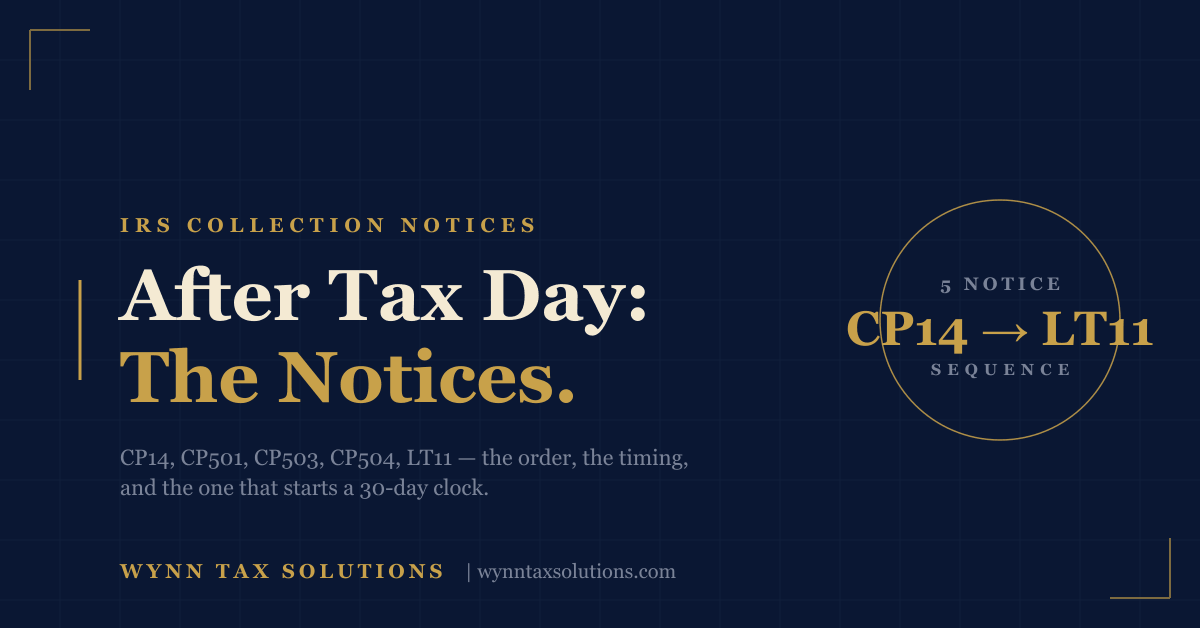
The IRS Collection Notice Sequence After Tax Day: CP14, CP501, CP503, CP504, and LT11 Explained
If you didn't file or pay by April 15, the IRS doesn't call — they mail. Here's the exact order of the five notices that arrive over the next several months, what each one means, and the one that triggers a 30-day window where stopping the levy gets dramatically harder.
Read More →
Today Is Tax Day: If You Haven't Filed or Paid Yet, Here's What Happens Next
April 15 is today. The IRS filing deadline is tonight. If you owe and haven't acted, penalties and interest begin accruing at midnight — but there are still moves you can make right now to limit the damage.
Read More →
Tax Day Is Tomorrow — And If You Haven't Filed Yet, Here's What the Next 3 Days Actually Cost You
April 15 is tomorrow. If your return isn't filed and you owe, the IRS clock is already running. Here's exactly what happens in the next 72 hours, what it costs you per day, and how to limit the damage right now.
Read More →
LT11 / Letter 1058 Explained: What This Final IRS Notice Means and Why You Shouldn’t Wait
LT11 / Letter 1058 is one of the most serious IRS collection notices you can receive. It means the IRS intends to levy your property or rights to property if you don’t act. Here’s what the letter means, what your deadline may be, and the smartest next steps if you owe.
Read More →
Iowa Income Tax Guide: 2025 Rate, Key Credits, and What to Do If You Owe Iowa Department of Revenue
Iowa shifted to a flat individual income tax rate for 2025, but many taxpayers still miss credits, underestimate quarterly payments, or fall behind after a balance due. Here is a practical guide to Iowa's 2025 rate, common adjustments and credits, and what to do if you owe Iowa Department of Revenue.
Read More →
Texas Tax Guide: No State Income Tax, Franchise Tax Basics, and What to Do If You Owe the Texas Comptroller
Texas has no state personal income tax — but that does not mean no state tax problems. Here is a practical guide to Texas franchise tax, common sales and use tax issues, and what to do if you owe the Texas Comptroller.
Read More →
Missouri Income Tax Guide: 2025 Rates, Key Deductions, and What to Do If You Owe the Missouri DOR
Missouri income tax rules can surprise people — especially 1099 workers, small business owners, and retirees. Here’s a clear breakdown of 2025 Missouri rates, common deductions and credits, major recent tax changes, and what to do if you owe the Missouri Department of Revenue (including payment plans, liens, garnishments, and Offer in Compromise options).
Read More →
California Income Tax 101: Rates, Deductions, Recent Changes, and What to Do If You Owe the FTB
California income tax is separate from the IRS — and the Franchise Tax Board (FTB) has its own rules, credits, and collection tools. Here’s a practical guide to rates and deductions, what changed recently, and the smartest steps to take if you owe California tax.
Read More →
State of the Union (2/24): Tax & Money Highlights — What Was Mentioned and What It Could Mean for Your Return
The 2/24 State of the Union included several tax-related claims and financial proposals — from “no tax on tips/overtime/Social Security” to tariffs and new retirement savings ideas. Here’s what was said, what to watch for, and what to do if you already owe back taxes.
Read More →
Offer in Compromise: Myth vs Fact (What the IRS Actually Looks At)
Offer in Compromise sounds like “settle for pennies,” but that’s not how the IRS evaluates it. Here’s a clean Myth vs Fact breakdown of who actually qualifies, what the IRS looks at, and why many offers fail.
Read More →
Currently Not Collectible (CNC): When the IRS Can Pause Collections Because You Can’t Afford to Pay
If paying the IRS would keep you from covering basic living expenses, you may be able to request a temporary collection delay called Currently Not Collectible (CNC). Here’s what CNC is, what it isn’t, what the IRS may require, and what to expect while your account is in hardship status.
Read More →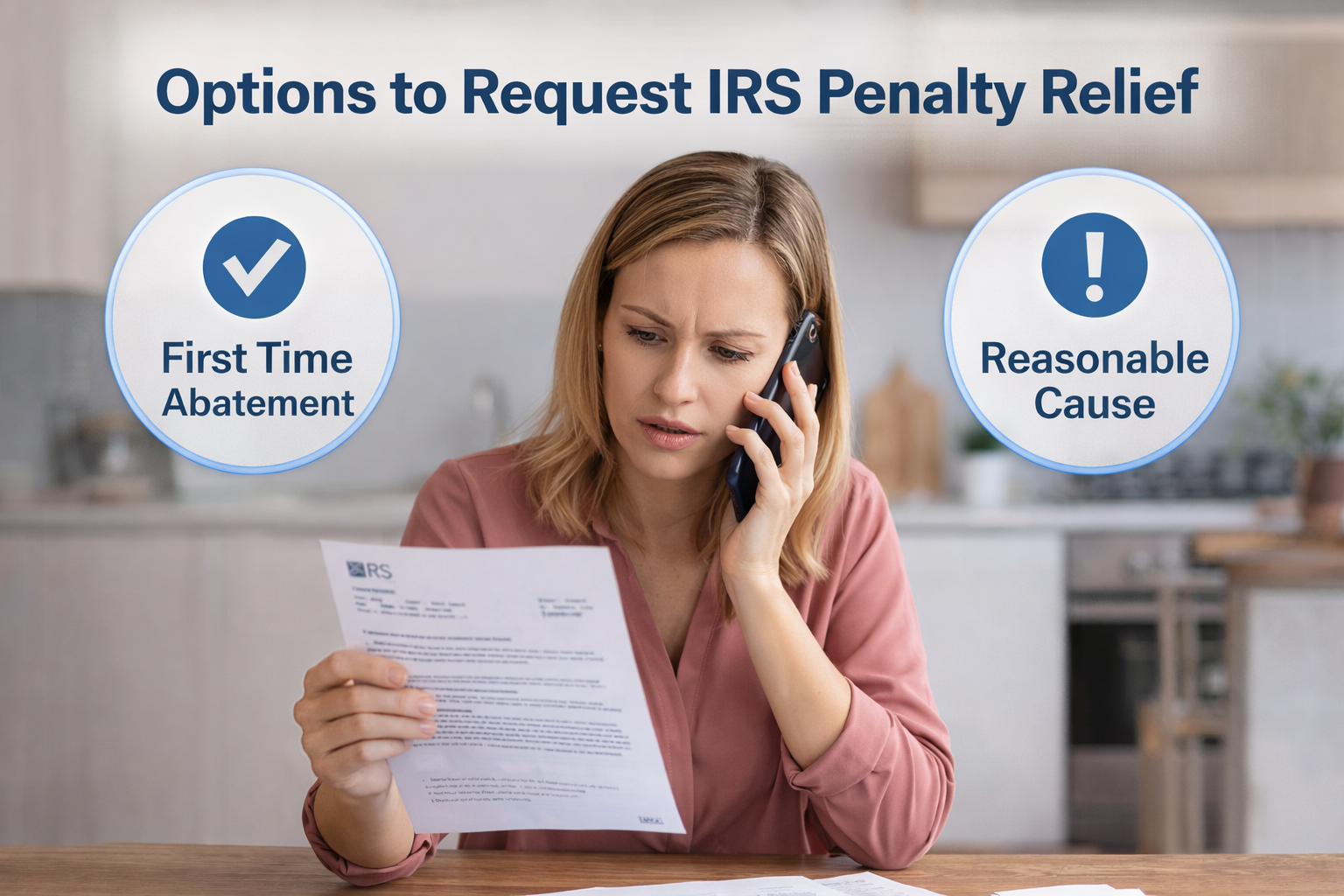
IRS Penalty Abatement: First Time Abate vs Reasonable Cause (and What Actually Works)
If you owe the IRS, penalties can add up fast. The good news: in many cases you can request penalty relief through First Time Abate (FTA) or Reasonable Cause. Here’s what each option means, who may qualify, and how to request it without making the situation worse.
Read More →
1099 vs Sole Proprietor vs S‑Corp: When Does It Make Sense to “Incorporate Yourself”?
A 1099 is a tax form — not a business structure. Most 1099 workers are sole proprietors by default. The real question is: when does it make sense to stay Schedule C vs elect S‑Corp status for potential savings (and added complexity)? Here’s a simple breakdown with real numbers.
Read More →
IRS Collection Notices Explained: CP14, CP501, CP503, CP504, LT11 — and What to Do If You Owe
If you owe the IRS, you’ll usually see a series of balance-due and collection notices that escalate over time. Here’s what the most common letters mean (CP14 through CP504, LT11/Letter 1058), what you might see next, and the safest way to respond without making things worse.
Read More →
Live in One State, Work in Another? Here’s How Blue-Collar Workers End Up Owing Taxes They Didn’t Expect
If you cross state lines for work — trucking, construction, field service, owner-operator, or side jobs — you can end up owing state taxes you didn’t even know were coming. Here’s why it happens, how to avoid the surprise bill, and what to do if you’re already getting notices.
Read More →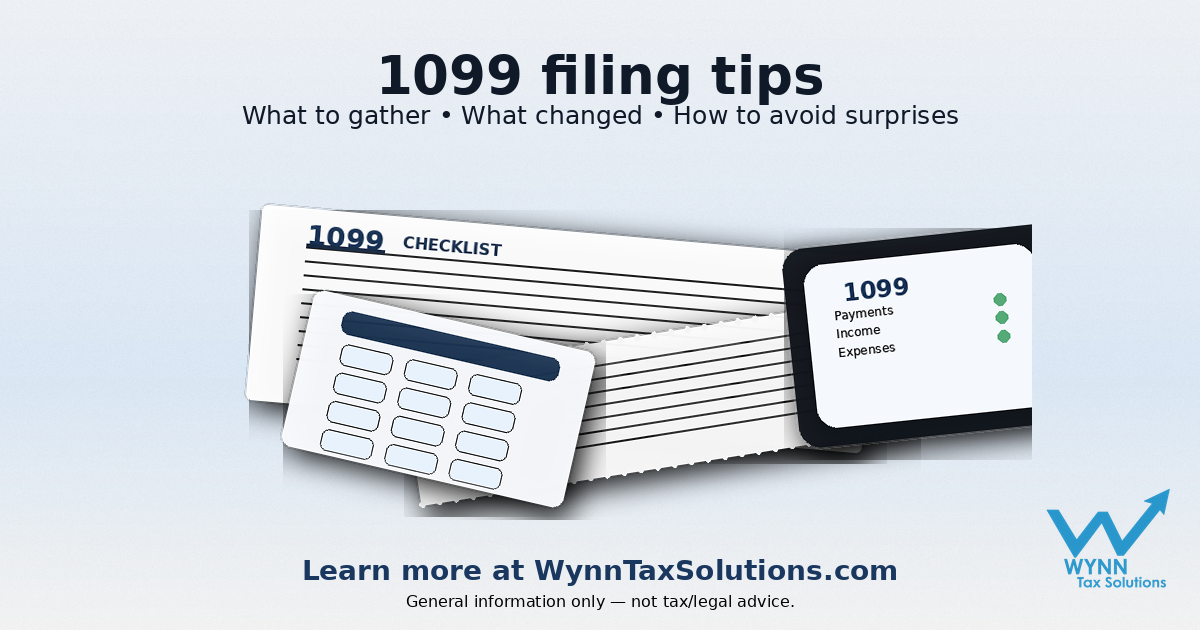
Best Tips for Filing Your 1099 Taxes This Year (2025 Return): What to Gather, What Changed, and How to Avoid Surprises
If you’re a 1099 contractor, gig worker, or small business owner, filing taxes can feel messy—until you break it into a simple checklist. Here are the best tips for filing your 2025 return, including what to track, what forms matter, and a key 1099-K reporting change that affects payment apps and online marketplaces.
Read More →
Possible Government Shutdown: What It Could Mean for Tax Season (and Why You Should Prepare Right Now)
With a late-January funding deadline, a partial government shutdown is possible right as tax season gets underway. Here’s what a shutdown could mean for IRS services, what happened during the 2025 shutdown, and why getting your documents together now matters—especially if you already owe.
Read More →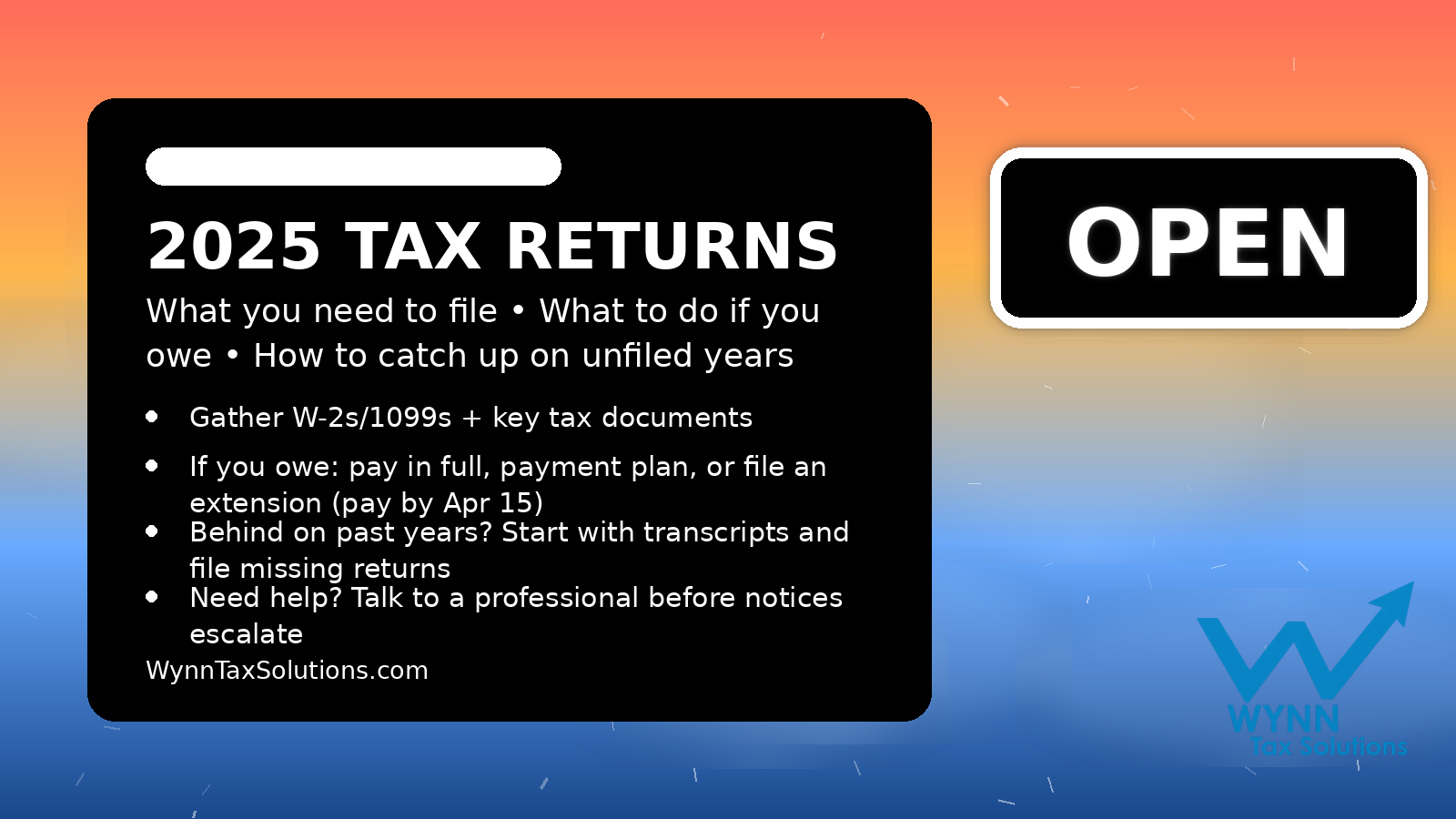
IRS Is Now Accepting 2025 Tax Returns: What You Need to File, What to Do If You Owe, and How to Catch Up
The IRS is officially accepting 2025 federal tax returns. Here’s a practical checklist of what you need to file, what to do if you owe (pay in full vs payment plan vs extension), and how to handle unfiled returns from prior years.
Read More →
IRS Opens the 2026 Filing Season on Jan. 26: What to Do Now + Key Individual Changes Under the One, Big, Beautiful Bill Act
The IRS officially begins accepting 2025 tax returns on Monday, Jan. 26, 2026. Here’s what to do before you file — plus a plain-English breakdown of major individual tax changes now in effect under the One, Big, Beautiful Bill Act.
Read More →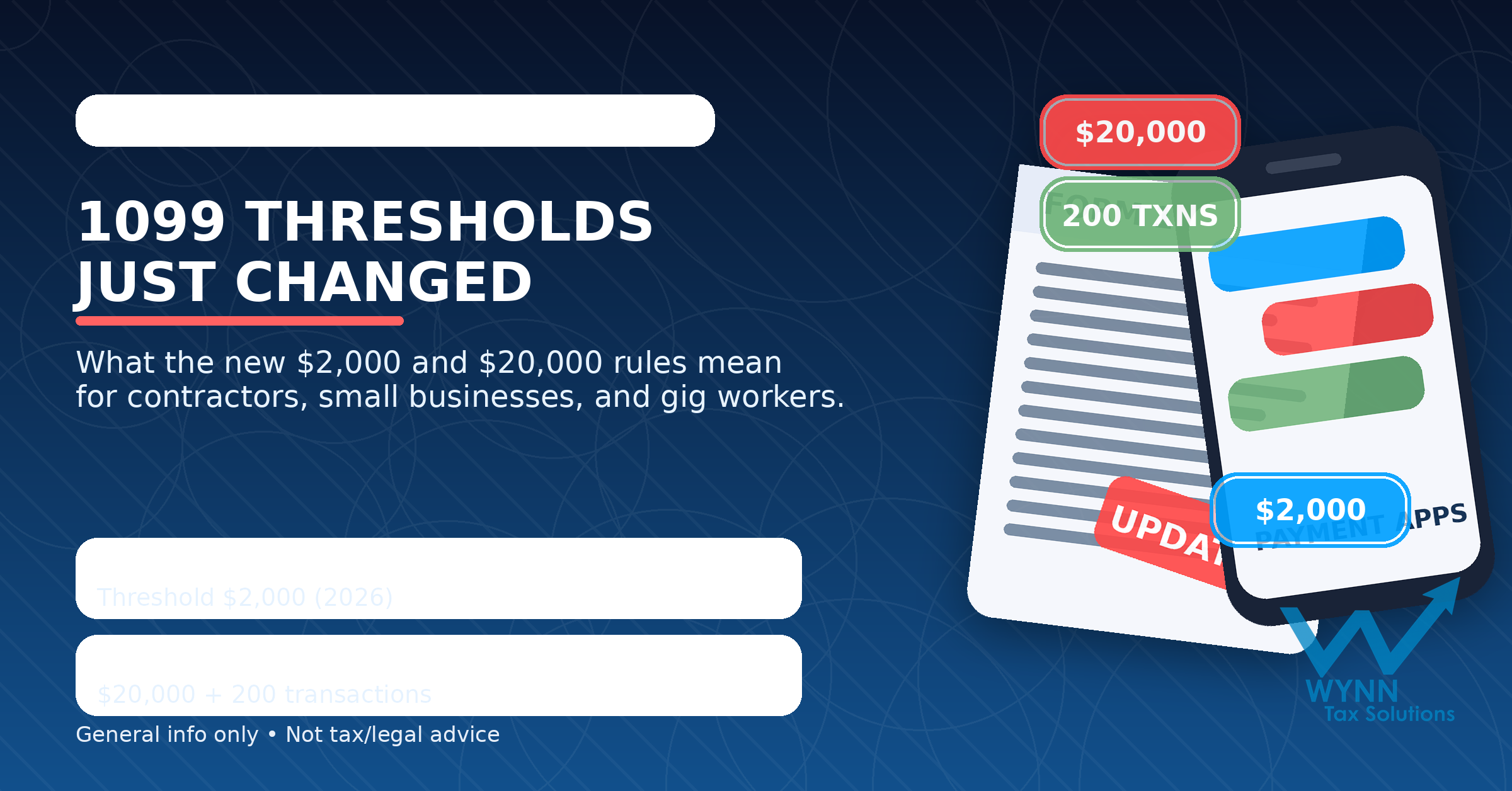
1099 Threshold Changes: The New $2,000 Rule for 1099-NEC/1099-MISC (2026) and the 1099-K Shift for Payment Apps
A new federal law changes multiple 1099 reporting thresholds. Starting in 2026, the reporting threshold for Forms 1099-NEC and 1099-MISC rises from $600 to $2,000 (and then adjusts for inflation). The law also restores the 1099-K payment app/marketplace threshold to the pre-$600 rule. Here’s what changed, what it does NOT mean, and how to protect yourself from surprise tax bills.
Read More →
New Gambling Loss Deduction Limit: The 90% Rule Starting in 2026 (Why Break‑Even Can Still Be Taxable)
A new federal tax law changes how gambling losses work starting in 2026. Instead of deducting 100% of losses (up to winnings), the deduction is reduced—meaning some gamblers can owe taxes even in a break‑even year. Here’s what changed, simple examples, and what to do if it triggers an unexpected IRS balance.
Read More →
Trump’s Proposed 10% Credit Card Interest Cap: Could Paying the IRS With a Card Save You Money?
President Donald Trump floated a one-year 10% cap on credit card interest rates. If something like this ever became law, it could change the math for taxpayers carrying an IRS balance — because IRS penalties can add up faster than most people realize, especially if you haven’t filed yet.
Read More →
Tariffs in 2025: Rising Costs, Higher Prices, and Why Now Is the Time to Resolve Your Tax Debt
New tariffs in 2025 are driving up the cost of goods across key industries, squeezing household budgets nationwide. Learn how these rising expenses may actually strengthen your case for IRS relief — and why now is the time to resolve back taxes.
Read More →
The 2025 Affordability Crisis: Why Tackling Tax Debt Makes Life More Affordable
With costs climbing and the holidays approaching, many families feel financially overwhelmed. Learn how the 2025 affordability crisis impacts IRS relief options—and why addressing back taxes now can actually free up room in your budget.
Read More →
The 2025 Government Shutdown: What Happened and What It Means for Taxpayers
From October 1st to November 12th, 2025, the U.S. experienced the longest government shutdown in history. Here’s a clear breakdown of what caused it, how it impacted the IRS, federal workers, and the average American — and what it means for taxpayers moving forward.
Read More →
Labor Day Spotlight: Standard vs. Itemized Deductions for W-2 Workers
W-2 workers face an important tax decision each year: take the standard deduction or itemize. Learn the differences, pitfalls, advantages, and how to protect yourself from audit risk — all with a Labor Day focus on the value of your work.
Read More →
What to Do If the IRS Assigns a Revenue Officer to Your Case
An IRS Revenue Officer is a local field collector with broad enforcement power. Learn who they are, how they differ from ACS, how they contact you, what to do when assigned, and why Wynn Tax Solutions is uniquely equipped to protect your income and assets.
Read More →
What to Do If You Receive an IRS CP504 Final Notice
The IRS CP504 Final Notice is a serious warning: you have 30 days to act before the IRS can seize your income, bank accounts, or property. Learn what it means, what’s at risk based on your balance and assets, and how to protect yourself.
Read More →
Questions About My 1099 – Truck Driver Edition
If you're a truck driver—or any 1099 contractor—taxes don't auto-deduct from your paycheck. You're both the worker and the accountant. This guide walks you through what to expect, common pitfalls, and how Wynn Tax Solutions can step in when life throws curveballs.
Read More →
How Retirement Accounts Affect Your Taxes at Every Stage
Retirement accounts like 401(k)s and IRAs are powerful tools for financial freedom, but they also come with important tax implications. This guide walks you through the impact of taxes at each stage—from contributing to withdrawing—so you can plan better and avoid costly surprises.
Read More →
7 Tax Pitfalls Small Businesses Face and How to Avoid Them
Many small businesses fall into common tax traps that cost time, money, and peace of mind. Learn what they are, how they affect you, and how Wynn Tax Solutions helps you stay compliant and confident.
Read More →
What to Do If You Receive an IRS CP503 Notice
The IRS CP503 is your second official notice that a tax balance remains unpaid. Learn why you received it, how it differs from CP501, and what steps to take before collections escalate.
Read More →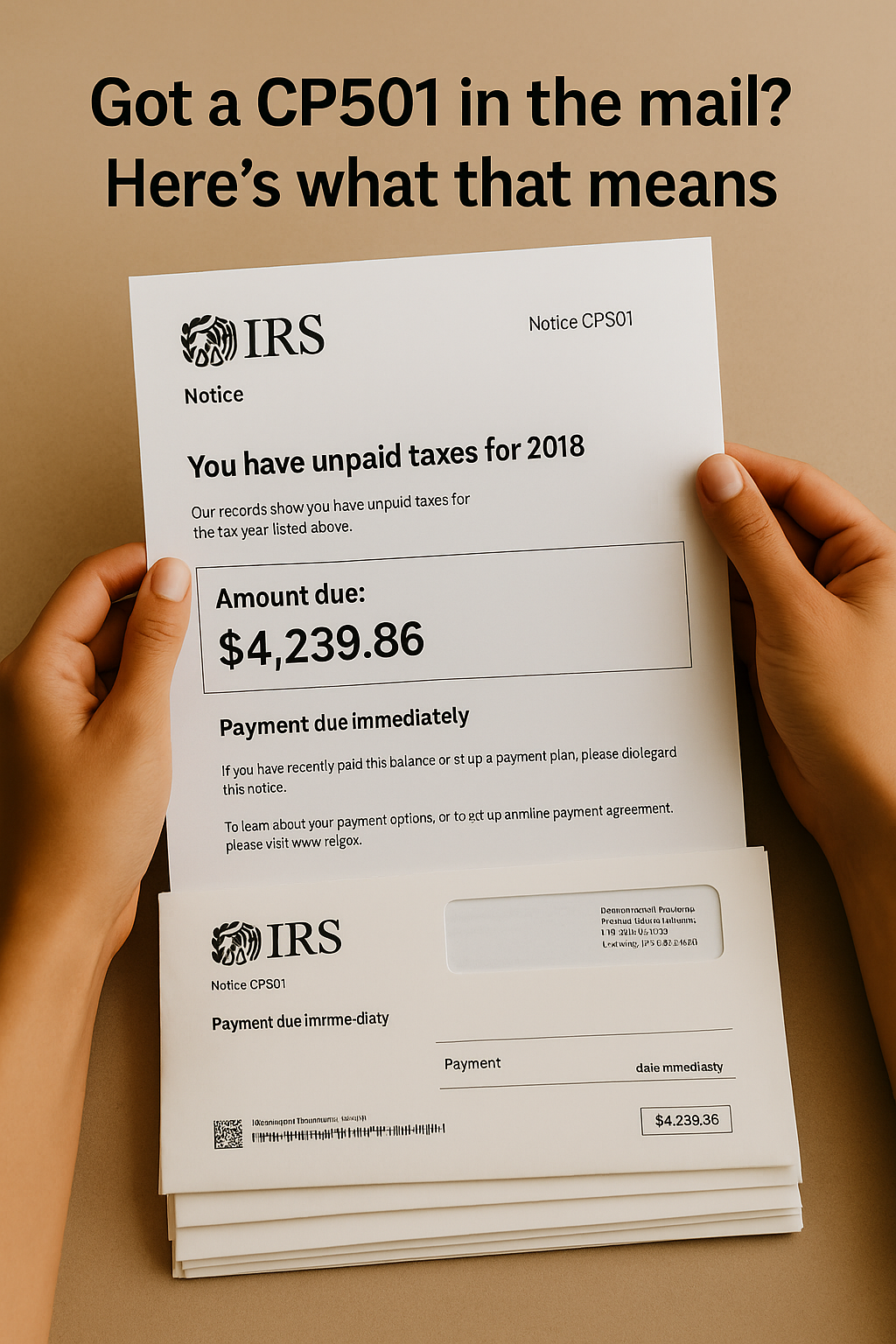
What to Do If You Receive an IRS CP501 Notice
The IRS CP501 is your first official notice that a tax balance is due. Learn what it means, why you received it, and what to do before collections escalate.
Read More →
How a Tax Advocate Embodies the Taxpayer Bill of Rights
Every taxpayer is protected by ten fundamental rights. Learn what these rights mean, how a Tax Advocate embodies them in their work.
Read More →
Understanding Tax Relief
Tax relief can help individuals and businesses reduce their tax burdens through deductions, credits, settlements, and negotiations with the IRS. Understanding your options and the steps involved is key to securing the best outcome for your financial situation...
Read More →
How to Really Negotiate with the IRS
Negotiating with the IRS doesn’t have to be overwhelming. With the right strategy, you can reduce penalties, set up manageable payment plans, or even settle your debt for less than you owe. Learn the key strategies to protect your financial future and get back on track...
Read More →
IRS Wage Garnishment: What It Is and How To Stop It
The IRS can legally garnish your wages if you owe back taxes and don’t take action. Learn how the garnishment process works, what signs to look for, and how Wynn Tax Solutions can help you stop it before your paycheck is affected.
Read More →
Bank Levy: What It Means When the IRS Freezes Your Account
A bank levy is one of the most aggressive IRS collection actions—and it can drain your account with no warning. Learn the signs, your rights, and how to stop or reverse a levy before it’s too late. This guide walks you through what to expect and how Wynn Tax Solutions can help.
Read More →